
- All
- Product Name
- Product Keyword
- Product Model
- Product Summary
- Product Description
- Multi Field Search
Views: 0 Author: Site Editor Publish Time: 2026-06-23 Origin: Site


Many buyers face a frustrating dilemma when upgrading their vessels. They want to bridge the gap between standard soft-bottom dinghies and fully rigid boats. You need better performance without overspending or compromising on safety. Transitioning from casual browsing to serious evaluation requires a clear strategy. Choosing the right vessel means carefully balancing payload capacity, material longevity, and propulsion needs. You must weigh these factors against your specific on-water goals.
Our objective is straightforward. We bypass marketing fluff to give you a practical, evidence-based evaluation framework. You will learn exactly how to compare hull types, fabrics, and engine setups effectively. By understanding the core mechanics of these unique vessels, you can make an informed purchasing decision. We will explore structural advantages, material science, and real-world sizing applications to guarantee your complete satisfaction.
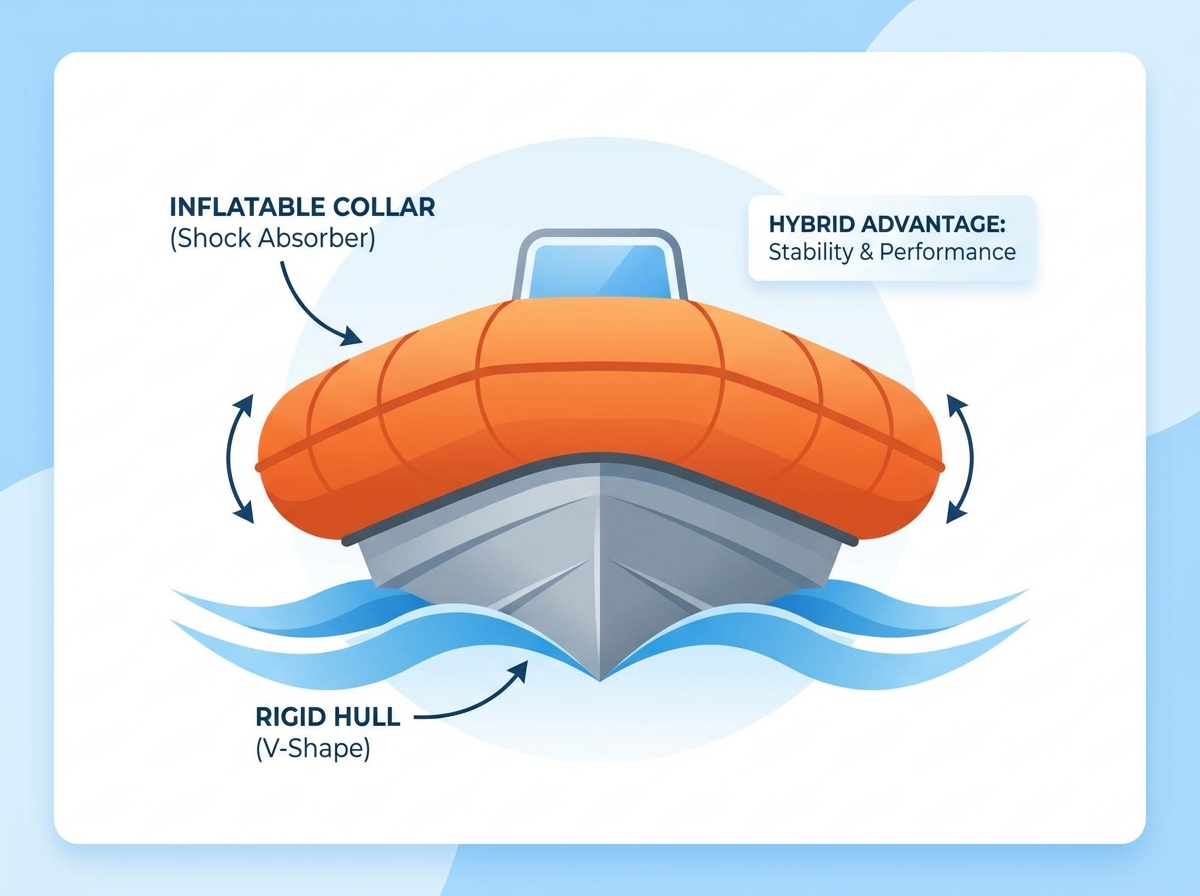
The Hybrid Advantage: RIBs combine a solid V-hull (fiberglass or aluminum) with inflatable collars (tubes), offering commercial-grade buoyancy with superior wave-handling.
Material Dictates Lifespan: The choice between PVC and Hypalon (CSM) determines whether the vessel lasts 5 years or 15+ years in high-UV environments.
Sizing to Outcomes: Selecting a vessel—from a 9-foot tender to a 20-foot offshore explorer—must align with specific payload requirements and storage realities.
Acquisition Strategy: Buyers looking at rigid inflatable boats for sale must evaluate total cost of ownership (TCO), including engine pairing, trailer costs, and tube maintenance.
Buyers often confuse a standard soft-bottom Inflatable Boat with a true hybrid vessel. This confusion leads to mismatched expectations regarding performance and durability. A soft dinghy flexes under pressure. It struggles in choppy waters. Conversely, hybrid models integrate a hard hull structure. They handle rough marine environments exceptionally well.
The secret lies in the solid hull base. Manufacturers build these hulls using marine-grade aluminum or fiberglass. This structural rigidity allows the deep-V hull to actively cut through chop. It slices waves rather than violently bouncing over them. You experience a much smoother ride. Furthermore, the hard hull provides a flat, stable interior deck. You can stand securely while underway or casting a fishing line.
Surrounding this hard hull is the inflatable collar, commonly called tubes. These tubes apply basic physics to enhance safety. They act as massive, buoyant shock absorbers. When you hit a wave, the collar cushions the impact. The protruding tubes also physically knock down sea spray. This keeps passengers remarkably dry during windy crossings. You do not get this dry ride on standard aluminum skiffs.
At rest, the outer tubes rest securely on the water surface. This wide footprint dramatically stabilizes the vessel. It creates a predictable platform for passengers. It makes capsizing practically impossible under normal conditions. Standard fiberglass boats tend to roll heavily in ocean swells. The inflatable collar completely limits this uncomfortable rolling motion.
You also gain a tremendous weight-to-capacity advantage. Data consistently shows that RIB Boats carry significantly higher payloads per foot than traditional fiberglass alternatives. A 15-foot hybrid can safely transport more passengers than a 15-foot rigid skiff. Because the vessel weighs less overall, you require less horsepower to reach planing speeds. This translates directly to better fuel efficiency and lighter engine requirements.
Selecting the right materials determines the lifespan of your vessel. We must evaluate two critical dimensions: tube fabric and hull construction. Making the wrong choice here often leads to premature wear and expensive repairs.
Manufacturers primarily use two distinct fabrics for the inflatable collars. You must choose based on your local climate.
PVC (Polyvinyl Chloride): This material is highly cost-effective and lightweight. It works perfectly for temperate climates and occasional use. Buyers must commit to strict UV-protective storage. UV rays degrade unprotected PVC quickly. PVC requires frequent applications of UV protectant sprays. If you neglect this routine, the fabric becomes brittle and sticky.
Hypalon (CSM): This represents the premium tier of marine fabrics. It offers extreme resistance to UV rays, harsh chemicals, and temperature fluctuations. Professionals demand Hypalon. You also need it if you live in tropical climates. Hypalon commands a higher upfront price. However, it easily outlasts PVC in extreme sunlight. Repairing Hypalon is also more straightforward. Technicians can sand and glue Hypalon patches to achieve incredible bond strength.
Your hull material dictates ride quality, interior layout options, and overall durability.
Fiberglass (GRP): Fiberglass weighs more than aluminum. This extra mass provides a noticeably smoother, quieter ride in rough chop. Builders can easily mold complex deck layouts into fiberglass. You get integrated seating, molded anchor lockers, and hidden storage compartments. These integrated features keep the deck clean and trip-free.
Aluminum: Aluminum hulls are significantly lighter. This weight reduction lowers your required engine horsepower. Aluminum also boasts massive resistance to beaching abrasions. It handles rocky shorelines and rugged coastal environments perfectly. Marine-grade aluminum will not crack or blister like fiberglass gelcoat. If you frequently dock against rough concrete seawalls, aluminum forgives minor impacts beautifully.
Implementation Risk: Be extremely cautious regarding PVC in high-sun exposure regions. If you leave a PVC vessel outside without a cover, seam degradation accelerates exponentially. Glued PVC seams will eventually fail under intense heat. Always match your fabric choice to your local climate and storage setup.
| Material Type | Weight Profile | UV Resistance | Ideal Application |
|---|---|---|---|
| PVC Tubes | Lightweight | Low to Moderate | Occasional use, temperate regions |
| Hypalon Tubes | Medium | Excellent | Tropical areas, professional daily use |
| Fiberglass Hull | Heavy | N/A (Gelcoat requires waxing) | Complex deck layouts, smooth rides |
| Aluminum Hull | Lightweight | N/A (Highly durable) | Rugged coastlines, rocky beaching |
Buying the wrong size ruins the boating experience. You must align the vessel length to your primary on-water activities. Each size category serves a very specific purpose.
These compact models focus heavily on portability and yacht integration. You can deploy them quickly for short ship-to-shore transits. They often utilize manual tiller steering to save weight. You can easily hoist them onto a larger boat using a basic davit system. Fleet managers often seek a wholesale compact RIB boat to supply multiple charter vessels. Yacht manufacturers rely on these reliable, space-saving tenders because they fit easily onto swim platforms.
Mid-sized vessels shift the focus toward passenger comfort. Families use these models for island hopping and coastal exploration. A 15-foot model comfortably seats six people. They offer versatile seating configurations and ample dry storage. You will often find built-in bow lockers for snorkeling gear. You also gain the capability to tow wakeboarders or tubers securely. Operating at these speeds requires center console setups. The center console design allows the driver to stand. Standing provides much better visibility when navigating shallow reefs or crowded anchorages.
Large offshore models feature aggressive deep-V hulls. They handle massive ocean swells confidently. The deep-V hull deadrise often exceeds 20 degrees. This sharp angle slices through towering waves safely. These vessels carry high fuel capacities for extended transits. Professionals use them for search and rescue, commercial diving, or law enforcement. They feature heavy-duty rubbing strakes to protect the tubes during ship-to-ship boardings. You will typically see redundant batteries and dual bilge pumps onboard. The deck layouts prioritize open workspace over cushioned seating.
Choosing the right motor impacts speed, range, and maintenance schedules. You must evaluate standard outboards against emerging electric propulsion technology.
Gasoline engines remain the trusted industry standard. Modern four-stroke outboards deliver quiet, reliable power. They sip fuel efficiently at cruising speeds. They provide excellent horsepower-to-weight ratios. You can easily refuel them at any local marina.
When selecting an outboard, do not just look at the maximum horsepower rating. You must check the manufacturer's maximum transom weight rating. A heavy four-stroke engine might meet the horsepower limit but exceed the physical weight limit. Overloading the transom severely alters the center of gravity. This makes the vessel dangerously stern-heavy. Always match your engine size to your typical passenger load. An underpowered vessel struggles to overcome the bow wave. It will plow through the water, wasting fuel and stressing the engine.
Electric motors for tenders represent a rapidly rising trend. They offer compelling advantages for specific scenarios, though they have distinct limitations.
Pros: Electric systems produce zero emissions. They operate in near total silence. You eliminate the hassle of winterization maintenance. You no longer need to carry messy fuel cans on your main yacht. You simply plug the battery in at the dock overnight.
Cons: The upfront battery costs remain incredibly high. Heavier fiberglass models suffer from limited range and lower top speeds when using electric power. Lead-acid batteries weigh too much for small tenders. Lithium-ion batteries reduce weight but increase initial costs substantially. Electric propulsion is best suited for smaller, lightweight aluminum models.
Navigating the current marine market requires a systematic approach. You must scrutinize both the seller and the physical product carefully before committing.
Always assess the warranty terms carefully before buying. Quality manufacturers provide separate, detailed warranties. You should see distinct coverage periods for the hull, the inflatable tubes, and the engine. Reputable brands back their Hypalon tubes for up to ten years. Verify whether the dealer handles warranty claims in-house or outsources the repairs.
Physical inspection reveals true build quality. Look closely at the seam construction. Welded seams on PVC tubes provide superior longevity compared to glued seams. Check the transom reinforcement. The engine mounting area must feature robust, thick bracing. Examine the air valves closely. High-quality valves ensure airtight integrity. Look for pressure relief valves on the tubes. These automatic valves release expanding air on hot days. They prevent the tubes from rupturing under intense solar heat.
Never purchase a vessel without a comprehensive demonstration. Test the planing speed with a realistic passenger load. Evaluate cornering stability at moderate speeds. The boat should bank smoothly without feeling jerky. Inspect the deck drainage performance. The scupper valves must clear water rapidly when you reverse or stop. Practice slow-speed maneuvering to ensure the hull tracks straight. Check the helm ergonomics to make sure the steering wheel falls naturally to your hands.
Buyers evaluating rigid inflatable boats for sale must look beyond the initial sticker price. Prepare your budget for essential accessories. Custom UV covers are strictly crucial for tube longevity. You will also need specialized trailers. Bunk trailers provide much better hull support than roller trailers. Finally, allocate funds for necessary marine electronics like VHF radios, chartplotters, and safety gear.
A hybrid vessel represents a serious, long-term marine investment. It successfully bridges the gap between lightweight portability and rugged, marine-grade seaworthiness. You get the stability of a raft alongside the performance of a hard boat.
Your next steps should focus on defining your core needs. First, finalize your primary use case. Decide if you need a simple tender or a standalone primary vessel. Next, choose your required hull and tube materials based strictly on your local climate and storage setup. Once your criteria are firmly set, begin requesting spec sheets. Schedule sea trials with reputable dealers to experience the impressive handling characteristics firsthand.
A: The lifespan heavily depends on the tube material. PVC tubes typically last 5 to 10 years with careful maintenance and UV protection. Premium Hypalon tubes often endure 15 to 20 years or more, even in harsh sunlight.
A: No, modern marine fabrics are incredibly tough. The multi-chamber design prevents catastrophic failure even if a puncture occurs. Standard docking and beaching rarely cause punctures. You must strike a sharp object with significant force to pierce the collars.
A: Yes, most modern designs feature self-bailing decks. Deck drainage systems use scupper valves to flush water out. Water drains rapidly when the vessel moves forward. Some models also utilize automatic bilge pumps to clear water when stationary.
A: We strongly advise against leaving it in the water year-round. Marine growth will quickly attach to the hull. Constant UV exposure rapidly degrades the inflatable tubes. We recommend using a boat lift or storing it ashore under a cover.


