
- All
- Product Name
- Product Keyword
- Product Model
- Product Summary
- Product Description
- Multi Field Search
Views: 0 Author: Site Editor Publish Time: 2026-07-07 Origin: Site


Selecting the right fishing vessel often forces a compromise between shallow-water accessibility, offshore capability, and long-term operational expenses. Buyers frequently overcapitalize on heavy, complex vessels that limit their launch options. Others under-invest in hulls that cannot safely handle unexpected offshore chop. The decision hinges on matching hull physics and deck layouts to specific operational environments. You need a platform that aligns with your local waterways, target species, and maintenance capacity.
This guide provides an objective, technical comparison between the traditional panga boat and the modern center console. We evaluate hull design, performance metrics, maintenance realities, and specific use cases. The goal is to drive a data-backed purchase decision based on real-world on-water performance rather than showroom appeal.
Hull Dynamics: Panga boats utilize a high bow, narrow beam, and shallow draft for extreme fuel efficiency and wave-piercing capability, whereas center consoles rely on wider beams and deep-V hulls for stability and heavy-water displacement.
Cost to Operate: A fiberglass boat with a panga hull requires significantly less horsepower to plane, drastically reducing initial engine costs, fuel consumption, and long-term maintenance compared to a similarly sized center console.
Layout and Amenities: Center consoles offer superior built-in storage, complex electronics integration, and 360-degree walkaround fishability. Pangas offer a utilitarian, open-deck layout that prioritizes payload capacity over creature comforts.
Decision Driver: Choose a center console for dedicated offshore trolling, family comfort, and heavy electronics use. Choose a panga for hybrid inshore/nearshore fishing, remote launches, and maximum operational ROI.
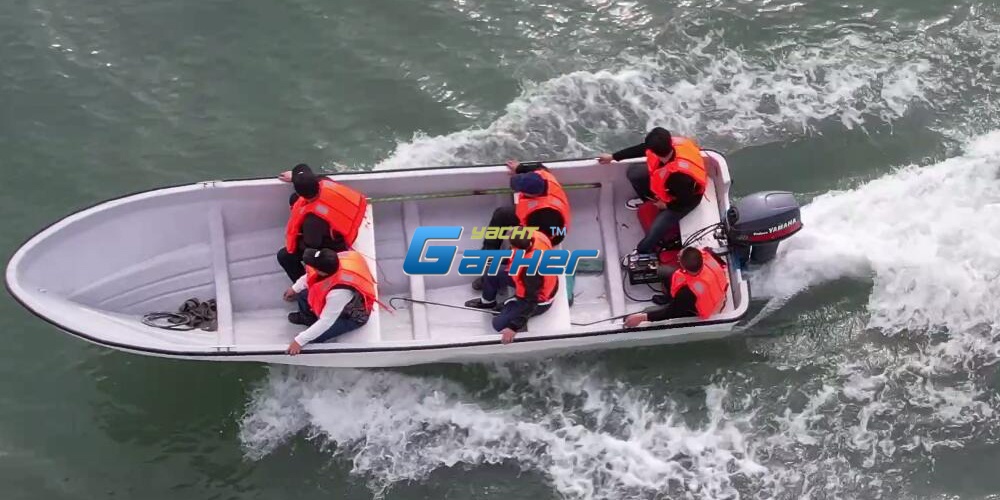
The delta-shaped hull, prominent bow flare, and narrow beam-to-length ratio define the classic panga. Originally designed for commercial fishermen launching directly from surf beaches, this hull shape prioritizes buoyancy and forward lift. The sharp entry cuts through surface chop. The pronounced bow flare deflects spray away from the deck, keeping occupants dry even in rough conditions. You will notice the distinct sheer line immediately.
A defining characteristic is the shallow draft combined with a flat running pad at the stern. This allows the vessel to plane at remarkably low speeds with minimal horsepower. Traditional setups often utilize a tiller-steer outboard, maximizing open deck space for nets and large catches. Modern recreational versions frequently incorporate micro-consoles. This shifts the operator forward while maintaining a highly utilitarian layout. A well-constructed fiberglass boat utilizing this design preserves the lightweight legacy of the original wooden models while significantly increasing structural durability and resistance to marine environments. The solid fiberglass stringer systems used today eliminate the rot issues of the past.
Center consoles dominate the recreational fishing market through their standard deep-V or modified-V hull designs. These hulls prioritize a wider beam, which translates directly to lateral stability at rest. When multiple anglers move to one side to gaff a fish, the wide footprint prevents excessive listing. You get a stable platform for bottom fishing.
This stability requires a heavier fiberglass layup and a complex internal structural grid. The added weight is necessary to support high-capacity fuel tanks, twin or triple outboard configurations, and heavy T-tops. The centralized helm station protects the operator behind a console large enough to house extensive navigational electronics, marine radios, and sometimes even a small marine head inside the console itself. The deep-V design requires significant horsepower to push the heavy hull onto plane.
Understanding the nuances between deep-V offshore center consoles, shallow-draft bay boats, and pangas helps match the vessel to the environment. Deep-V consoles excel in heavy offshore swells but draw too much water for tidal flats. Bay boats offer lower gunwales and shallower drafts for inshore work but often lack the bow height needed to safely navigate steep offshore chop.
The panga occupies a unique overlapping territory. It matches the shallow-water performance of a bay boat, often floating in less than a foot of water. At the same time, it retains the wave-piercing safety and high bow of an offshore center console. This hybrid capability makes it highly versatile for anglers who refuse to be restricted to a single body of water.
| Feature | Panga Boat | Deep-V Center Console | Bay Boat |
|---|---|---|---|
| Draft | 8 - 12 inches | 18 - 24 inches | 10 - 14 inches |
| Bow Height | High (Pronounced Flare) | High | Low to Medium |
| Beam | Narrow | Wide | Wide |
| Horsepower Requirement | Low | High | Medium to High |
Draft dictates accessibility. A typical panga features a sub-12-inch draft, allowing operators to navigate tidal creeks, oyster bars, and shallow flats with confidence. In contrast, a standard deep-V center console typically draws 15 to 24 inches, restricting access to deeper channels and open bays. You cannot push a heavy deep-V over a sandbar.
The lighter weight of the panga translates directly to maneuverability. Poling across a flat or using a bow-mounted trolling motor requires significantly less energy. This agility proves invaluable when navigating tight backwaters or stalking easily spooked fish. Furthermore, both vessel types are increasingly popular in large freshwater lakes for species like Walleye, Striper, and Catfish. In these environments, the panga handles tight, wind-driven lake chop exceptionally well, maintaining speed where heavier boats might struggle without applying massive horsepower.
Approach shallow flats slowly, trimming the outboard up to utilize the flat stern pad.
Deploy the bow-mounted trolling motor to navigate silently through oyster beds.
Use the high bow as a casting platform to spot redfish or cobia from a distance.
Rely on the narrow beam to slide through tight mangrove channels where wider boats get stuck.
When conditions deteriorate, the fundamental physics of each hull become apparent. The panga rides on top of the waves, utilizing its sharp bow entry to pierce the chop. It requires the operator to actively trim the bow down into a head sea, allowing the sharp entry to do the work. The center console takes a different approach, relying on its sheer weight and deep-V deadrise to crush through swells, displacing large volumes of water.
The trade-off occurs at rest. The panga's narrow beam can result in a tendency to roll or "snap back" in a beam sea while bottom fishing or drifting. The wide-beam center console offers superior lateral stability, providing a more comfortable platform when the engines are off. Operator fatigue also differs. Standing at a large console with a heavy-duty T-top grab rail offers more physical support in rough water compared to operating a tiller handle or a smaller micro-console.
The primary selling point of the center console is the 360-degree fishability. Anglers can follow a hooked pelagic completely around the boat without obstruction, passing rods over the bow or around the outboards with ease. The wide decks accommodate multiple people casting simultaneously. You have room to move during a chaotic bite.
Pangas counter with exceptional payload capacity and deep interior freeboard. The open floor plan maximizes cargo space, easily accommodating large commercial-grade coolers, dive gear, and extensive tackle. However, depending on the specific console or tiller configuration, movement from bow to stern might be slightly more restricted compared to a wide-beam CC. The gunwales are often lower in the stern, making it easier to pull heavy fish or dive gear aboard.
Center consoles arrive from the factory heavily integrated. Insulated fish boxes, pressurized livewells, and flush-mounted Multi-Function Displays (MFDs) are standard. This integration creates a clean, snag-free deck but adds significant complexity to the wiring and plumbing systems. When a pump fails offshore, accessing the bilge can be a nightmare.
Pangas take a minimalist, modular approach. Owners often rely on heavy-duty deck-mounted coolers for fish storage and transom-mounted baitwells. This bare-bones approach allows owners to custom-rig their vessel exactly to their specifications. You only install what you need, avoiding the maintenance headaches of complex factory systems that are prone to failure in harsh marine environments.
| System | Center Console Approach | Panga Approach |
|---|---|---|
| Fish Storage | In-deck insulated macerator boxes | Deck-mounted modular coolers |
| Livewells | Pressurized, multi-pump systems | Simple transom aerator or portable tank |
| Electronics | Flush-mounted dual MFDs | Single bracket-mounted sonar/GPS |
| Wiring | Complex harnesses, hidden chases | Simple, accessible, minimal runs |
Different hulls suit different tactics. For sight fishing Cobia or Redfish, the high bow of a panga serves as an excellent vantage point, offering better visibility than the lower, flatter decks of bay-style center consoles. When chasing surface-feeding Yellowtail in kelp beds, the panga's quick, responsive handling allows for rapid repositioning. You can spin the boat on a dime.
Conversely, for open-water tactics like trolling multi-line spreads for offshore pelagics, the wider beam of the center console provides the necessary space for outriggers, multiple rod holders, and the stability required to manage complex trolling patterns. The heavy displacement hull tracks straighter in following seas while trolling.
The barrier to entry differs drastically. A fully rigged center console requires a substantial initial investment, driven by the heavy fiberglass materials, complex factory integration, and the requirement for high-horsepower outboards. A similarly sized panga requires a fraction of that investment. You pay for raw utility rather than luxury upholstery and hidden LED lighting.
Depreciation curves also diverge. Premium center consoles retain high nominal resale value due to brand prestige and market demand. However, pangas experience remarkably minimal depreciation. Their low initial cost, combined with high demand in niche fishing and diving communities, ensures they hold their value exceptionally well over time. A well-maintained fiberglass hull will last decades.
Horsepower-to-weight ratios dictate fuel consumption. A 22-foot panga performs optimally with a 90HP to 115HP outboard due to its flat running pad and light weight. A 22-foot center console, burdened by its heavy structural grid and deep-V hull, often requires 200HP to 250HP just to achieve similar cruising speeds. This translates directly to massive savings at the fuel pump for the panga owner. You burn gallons per hour, not miles per gallon.
Maintenance realities further separate the two. The long-term costs of servicing complex CC wiring, replacing pressurized pumps, and maintaining dual-battery systems add up quickly. The panga relies on simplified, easily washed-down systems. Single outboard configurations halve routine engine maintenance costs, and the lack of complex plumbing reduces unexpected repair bills. You spend more time fishing and less time wrenching.
The 19-foot length offers unparalleled logistical advantages. Towing a 19FT Fiberglass Panga Boat for Fishing requires only a standard mid-size SUV or half-ton truck. The light weight allows a solo operator to launch and retrieve the vessel at unimproved, shallow-water ramps where larger center consoles would ground out. You do not need a heavy-duty diesel truck to move this vessel.
This specific size bridges the gap between a dedicated flats skiff and a nearshore reef boat. It drafts shallow enough to hunt redfish in the marsh but possesses enough bow flare and seaworthiness to run a few miles offshore for snapper on calm days. For the solo angler or a two-person crew, it represents the most versatile platform available. You get maximum utility in a compact footprint.
Optimizing this hull requires restraint. Over-rigging adds unnecessary weight, defeating the primary advantages of the hull design. Keep the deck clear and the systems simple.
Install a reliable 60HP to 75HP outboard to maximize fuel efficiency while maintaining a 25-knot cruise.
Mount a 24V bow trolling motor with a quick-release bracket for silent inshore maneuvering.
Use a simple, removable casting platform on the bow for sight fishing.
Limit electronics to a single, high-quality 7-inch or 9-inch sonar/GPS unit mounted on a sturdy bracket.
Utilize a heavy-duty 65-quart cooler as both a helm seat and primary fish box.
Select a center console if your primary focus is offshore trolling, frequent rough-water crossings, or if you require high passenger capacity. If your crew demands integrated creature comforts like extensive seating or a marine head, the CC is the logical choice. Be prepared for higher upfront costs, the need for a heavy-duty tow vehicle, and increased fuel budgets. You are buying comfort and heavy-weather capability.
Select a panga if your primary focus is utility, extreme fuel efficiency, and shallow-water access combined with nearshore capability. It is the definitive choice for budget-conscious operation and remote launching. Accept that the ride in heavy chop requires active piloting, dry storage is minimal, and the narrow beam sacrifices some stability at rest. You are buying raw capability and operational freedom.
Evaluate your local boat ramps at low tide to determine draft restrictions.
Calculate your annual fuel budget based on a 50-mile round trip.
Assess your tow vehicle's realistic capacity, factoring in fuel, ice, and gear weight.
To finalize your decision, take the following steps:
Schedule sea trials for both hull types in choppy conditions to understand how they react to head seas and following seas.
Calculate your actual towing capacity and verify the condition of your local boat ramps at low tide.
Assess your realistic fishing habits. If you spend 80% of your time inshore, do not buy a boat designed for the 20% of time you might go offshore.
Consult local marine mechanics regarding the serviceability and parts availability for the specific outboard brands you are considering.
A: Yes, when operated correctly. Their prominent bow flare deflects waves, and most modern fiberglass models feature self-bailing decks. Safety depends heavily on operator skill in reading weather patterns and trimming the bow properly in following seas.
A: The combination of a narrow beam, a flat running pad at the stern, and a lighter fiberglass layup reduces water resistance. This allows the hull to achieve plane quickly and maintain cruising speeds with significantly smaller engines.
A: Depending on the load, engine weight, and rigging, a 19-foot model typically drafts between 8 to 12 inches. This shallow draft allows access to tidal flats and unimproved launch ramps.
A: The sharp bow entry cuts through chop smoothly if the bow is trimmed down. If the boat is driven too fast or trimmed improperly, the flatter stern section can pound against the waves, resulting in a rougher ride.
A: Premium center consoles hold high nominal value, but pangas experience the lowest percentage of depreciation. Their low initial purchase price and high demand among utilitarian anglers ensure they retain excellent resale value over decades.


